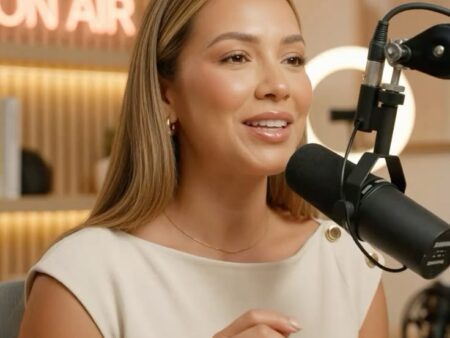

Every great podcast sounds effortless. The host flows naturally from one topic to the next, transitions feel smooth, guests open up beautifully, and the whole episode lands with purpose. What most listeners don’t realize is that behind that effortless delivery is careful preparation — and almost always, a script.
Sample podcast scripts are one of the most underutilized tools in a new host’s arsenal. Whether you’re launching your first show or refreshing a format that’s gone stale, having a solid script framework changes everything. It reduces filler words, sharpens your structure, and gives you the confidence to actually be present in the conversation rather than panicking about what comes next.
This guide gives you seven ready-to-use sample podcast scripts covering every major podcast format — solo shows, interviews, co-hosted episodes, trailers, intros, outros, and sponsored segments. Each template is built on what actually works, drawn from the patterns of successful shows across every genre.
For professional podcast production resources and agency-level guidance, Podcast Agency Network is the go-to platform for hosts who are serious about growing their shows.
Why Every Podcaster Needs a Script
Before we get into the templates, let’s address the most common objection: “Won’t a script make me sound robotic?”
The answer is no — if you use scripts correctly.
There’s a critical difference between reading a script word-for-word and using a script as a structural anchor. The best hosts don’t memorize every line. They internalize the flow, key talking points, and transitions — then speak naturally within that structure.
Think of a script the way a jazz musician thinks about chord progressions. The structure is fixed, but the expression within it is free. Sample podcast scripts give you the chord progression. Your personality, energy, and spontaneity fill in the music.
The practical benefits are significant:
- Shorter recording sessions — you know exactly where you’re going
- Tighter episodes — no 20-minute tangents that bore your audience
- Consistent quality — every episode meets the same structural standard
- Easier editing — scripted content has cleaner edit points
- Less anxiety — especially valuable for new hosts managing nerves
Template 1 – The Solo Episode Script
Solo episodes are the most script-dependent format in podcasting. Without a guest to carry half the conversation, every word out of your mouth needs to serve a purpose.
[INTRO — 60 seconds]
“Welcome back to [Podcast Name]. I’m [Your Name], and today we’re talking about [Topic]. If you’ve ever struggled with [Pain Point], this episode is going to give you [Specific Outcome]. Let’s get into it.”
[HOOK — 90 seconds]
“Before we dive in, let me tell you about [Personal Story or Surprising Statistic related to topic]. That moment completely changed how I think about [Topic], and by the end of this episode, it might change how you think about it too.”
[MAIN CONTENT — broken into 3 sections]
Section 1: [First Key Point] “The first thing you need to understand about [Topic] is [Key Insight]. Here’s why this matters: [Explanation + Example].”
Section 2: [Second Key Point] “Now, most people make the mistake of [Common Error]. Instead, what actually works is [Better Approach]. I’ve seen this play out with [Story or Case Study].”
Section 3: [Third Key Point] “The third piece of this — and this is the one people always skip — is [Insight]. [Explanation]. Think of it this way: [Analogy or Metaphor].”
[CALL TO ACTION]
“If this resonated with you, I’d love it if you shared this episode with someone who needs to hear it. And if you haven’t already, subscribe wherever you’re listening so you never miss an episode.”
[OUTRO — 30 seconds]
“That’s all for today. I’m [Your Name], this is [Podcast Name], and I’ll see you next [Day/Week].”
This structure keeps solo episodes focused, listenable, and between 15–25 minutes depending on how deeply you develop each section. You can explore more solo format sample podcast scripts and production templates at Podcast Agency Network.
Template 2 – The Interview Episode Script
Interview episodes feel conversational, but the best ones are carefully scaffolded. Your guest should never feel interrogated — but you should always know exactly where the conversation is headed.
[PRE-INTERVIEW CHECKLIST — before recording]
- Confirm guest name pronunciation
- Review their recent work, book, or project
- Prepare 8–10 questions (you’ll use 5–6)
- Have water ready, recorder tested, distractions removed
[INTRO — 60–90 seconds]
“Welcome to [Podcast Name]. I’m [Your Name]. Today I’m sitting down with [Guest Name], who is [One-Sentence Bio highlighting most relevant credential]. [Guest Name] has [Specific Achievement], and today we’re going to talk about [Topic]. [Guest Name], welcome to the show.”
[WARMUP QUESTION — 2 minutes]
“Before we get into [Main Topic], I always like to start with a question that tells me a lot about a person: [Easy, Engaging Question — e.g., ‘What’s the best piece of advice you’ve ever received?’ or ‘What are you working on right now that has you most excited?’]”
[CORE QUESTIONS — 20–35 minutes]
Question 1: “Let’s start at the beginning. How did you first get into [Field/Topic]?” Question 2: “What’s the biggest misconception people have about [Topic]?” Question 3: “Walk me through [Specific Process, Story, or Framework they’re known for].” Question 4: “What was the moment when everything changed for you?” Question 5: “If someone is just starting out in [Field], what’s the first thing you’d tell them?”
[CLOSING QUESTIONS — 5 minutes]
“Before I let you go — where can people find you, follow your work, and learn more about [Project/Book/Company]?”
[OUTRO — 45 seconds]
“That was [Guest Name]. Links to everything they mentioned are in the show notes. If you enjoyed this conversation, please leave a review — it genuinely helps new listeners find the show. Until next time.”
Template 3 – The Podcast Trailer Script
Your trailer is the single most important piece of audio you will ever produce. It has one job: convert a browser into a subscriber. Most trailers fail because they describe the podcast instead of demonstrating it.
[LENGTH: 60–90 seconds maximum]
“[Open with your most powerful line — a question, a bold statement, or a surprising fact.]
My name is [Your Name], and this is [Podcast Name] — a show about [Specific Topic for Specific Audience].
Every [week/month], I [what you do — interview, explore, investigate, teach] [what the listener gains].
[One sentence about your credibility or unique angle — why you and why now.]
If you’re someone who [describes ideal listener], this show was made for you.
Subscribe now wherever you’re listening, and let’s get started.”
Short, specific, and focused entirely on the listener’s world — not yours. For professionally reviewed sample podcast scripts including trailer templates used by top-ranking shows, Podcast Cola has an extensive resource library worth exploring.
Template 4 – The Sponsored Segment Script
Monetizing your podcast means writing ad reads that don’t make your audience reach for the skip button. The best ad reads feel like personal recommendations, not commercials.
[PRE-ROLL — 20–30 seconds]
“Before we get into today’s episode, I want to tell you about [Sponsor Name]. [One sentence describing what they do and who they serve]. I’ve been using [Product/Service] for [Time Period], and [Specific Personal Experience]. Right now, [Sponsor] is offering [Podcast Name] listeners [Specific Deal]. Go to [URL] or use code [CODE] at checkout. That’s [URL].”
[MID-ROLL — 45–60 seconds]
“We’ll be right back, but first — [Sponsor Name]. [Two to three sentences about the product, including a personal story or specific use case]. Here’s what I love most about it: [Specific Feature + Benefit]. If you want to try it for yourself, head to [URL] and use code [CODE] for [Discount/Offer]. I’ll put the link in the show notes too.”
The key to effective ad reads is specificity. Vague endorsements sound like paid placements. Specific personal experiences sound like genuine recommendations.
Template 5 – The Co-Hosted Episode Script
Co-hosted shows have a different energy — more conversational, more dynamic, often more fun. But without structure, they can also become unfocused and self-indulgent. A loose script keeps co-hosts aligned without killing the chemistry.
[PRE-SHOW RUNDOWN — agree before recording]
- Topic for today’s episode
- Who opens, who closes
- Key talking points each host owns
- Planned length
- Any segments (news, listener questions, recommendations)
[INTRO — 60 seconds, split between hosts]
Host 1: “Welcome back to [Podcast Name]. I’m [Name].” Host 2: “And I’m [Name]. Today we’re talking about [Topic].” Host 1: “This one came up because [Brief Context — why this topic, why now].” Host 2: “And I have strong opinions about it, so buckle up.”
[DISCUSSION STRUCTURE]
Round 1: Host 1 opens with their take — 3–4 minutes Round 2: Host 2 responds, agrees or pushes back — 3–4 minutes Round 3: Open exchange — organic conversation within the topic Round 4: Synthesis — where do you both land?
[OUTRO — split]
Host 1: “That’s it for today’s episode of [Podcast Name].” Host 2: “If you want to keep the conversation going, find us on [Platform].” Host 1: “And we’ll see you [next week / next time].” Both: “Bye!”
Template 6 – The News Recap Episode Script
News and current events podcasts require a tighter script than almost any other format because accuracy, pace, and clarity are non-negotiable.
[INTRO — 45 seconds]
“It’s [Day], [Date], and here’s what you need to know. I’m [Your Name] and this is [Podcast Name]. Let’s get into it.”
[STORY 1 — 3–4 minutes]
“Our top story today: [Headline]. Here’s what happened: [Who, What, When, Where — 2 sentences]. Why it matters: [Context and significance — 2–3 sentences]. What happens next: [Forward-looking statement].”
[STORY 2 — 2–3 minutes]
(Same structure — Headline, What happened, Why it matters, What’s next)
[STORY 3 — 2–3 minutes]
(Same structure)
[CLOSING — 30 seconds]
“That’s your briefing for [Day]. I’ll be back [tomorrow/next episode] with more. Find show notes and sources at [Website]. I’m [Your Name] — stay informed.”
Template 7 – The Listener Q&A Episode Script
Q&A episodes build community and make listeners feel heard. They also require less research than topic-driven episodes — making them an excellent format for maintaining publishing consistency.
[INTRO — 60 seconds]
“Welcome back to [Podcast Name]. Today is a Q&A episode — one of my favorite formats because it means I get to hear directly from you. I pulled [Number] questions from [Platform — Instagram, email, etc.] and I’m going to answer them as honestly as I can. Let’s go.”
[PER QUESTION STRUCTURE]
“Our first question comes from [First Name or Handle], who asks: ‘[Question]’.
Great question. Here’s my honest answer: [Answer — 2–4 minutes depending on complexity].
[Bonus insight or personal story if relevant].
Next question…”
[OUTRO — 45 seconds]
“That’s all the questions for today. If you want your question answered on a future episode, [how to submit — DM, email, comment]. Thank you for listening, thank you for writing in, and I’ll talk to you [next time].”
How to Use These Scripts Without Sounding Scripted
The goal of sample podcast scripts is never to produce robotic, word-for-word readings. Here’s how to internalize a script so it sounds completely natural:
Read it aloud three times before recording. The first time you encounter an awkward phrase, you’ll stumble. By the third time, it flows.
Highlight your key anchors. You don’t need to memorize every word — just the transitions, the opening hook, and the closing CTA. Everything in between can be improvised within the structure.
Record a rough cut first. Use the script as a safety net for your first pass, then do a second take where you put the script aside and speak from memory. The second take is usually better.
Edit ruthlessly. A script that looks good on paper sometimes sounds different when spoken. Be willing to cut lines that don’t land when you hear them back.
For professional feedback on your scripts, production quality reviews, and agency-level podcast consulting, Podcast Agency Network connects hosts with experienced producers who can elevate your show from good to exceptional.
Final Thoughts
The difference between a podcast that sounds professional and one that sounds amateur is rarely equipment. It’s preparation. Sample podcast scripts give you the preparation infrastructure to show up to every recording session ready, focused, and confident.
Start with the template that matches your format. Customize it to fit your voice and your audience. Record it, listen back critically, and refine. After a few episodes, the structure will become second nature — and you’ll wonder how you ever recorded without it.
The best podcasts in every category share one common trait: their hosts always know where they’re going. Sample podcast scripts are how you make sure you always do too.
For additional script templates, format guides, and production resources used by top-ranking shows worldwide, Podcast Cola is an essential bookmark for any host serious about their craft.
Ready to take your podcast to the next level? Explore agency resources, production guides, and show growth strategies at Podcast Agency Network.